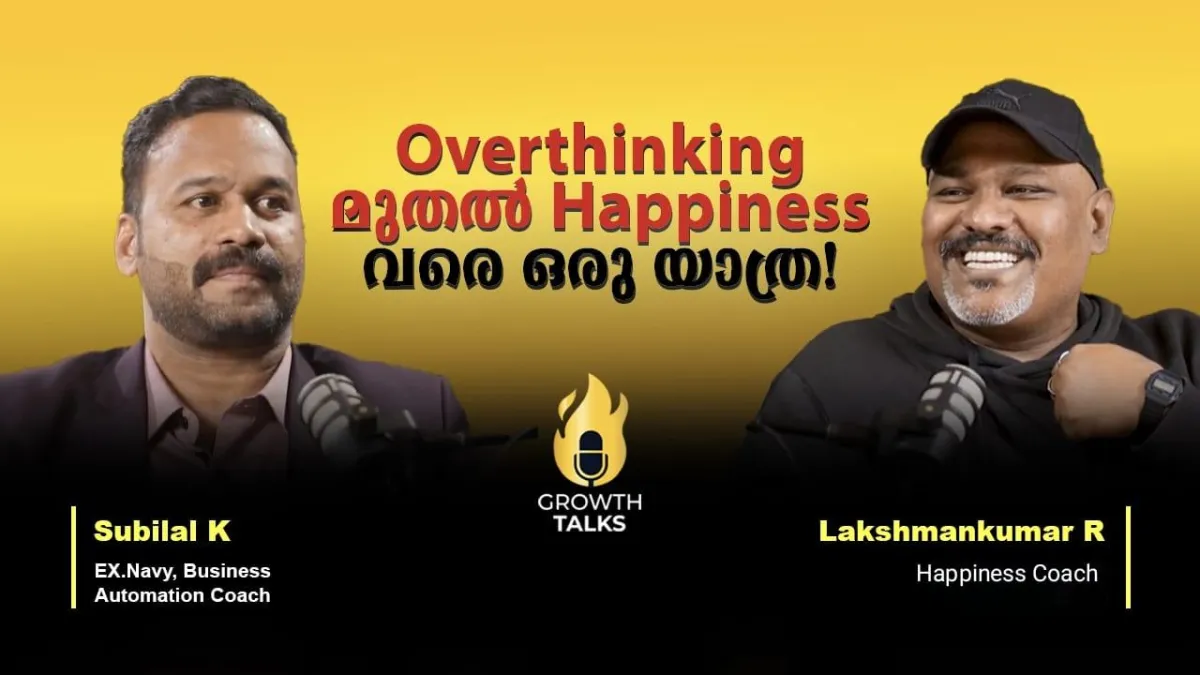
A JOURNEY FROM OVERTHINKING TO HAPPINESS - LAKSHMAN KUMAR
The video transcript presents an in-depth discussion on the issue of overthinking, its impact on emotional well-being, and practical ways to manage and transform one’s thought patterns for a better life. The speaker, Mr. Lakshman Kumar, an ICF-certified coach and NLP grandmaster, sheds light on how unresolved thoughts and subconscious mind activity influence emotions such as anger, sadness, and frustration, which eventually affect behavior and overall mental health. The conversation explores the root causes of overthinking, including unresolved internal conflicts, ego, value and belief systems, and societal conditioning.
Lakshman emphasizes the importance of self-awareness and conscious observation of one’s thought patterns to break unhealthy cycles of overthinking. He explains that most individuals live on autopilot, controlled by their subconscious, which governs routine actions without conscious intervention. Overthinking often arises from unaddressed emotional layers and ingrained belief systems, leading to procrastination, stress, anxiety, and strained relationships.
The podcast also discusses the significance of identifying one’s true values and beliefs to understand emotional triggers and conflicts, especially in close relationships like between spouses. It highlights the necessity of open communication, empathy, and constructive dialogue to resolve misunderstandings that stem from misaligned expectations and unexpressed feelings.
Lakshman advocates for a shift in perspective from external circumstances to internal change—encouraging individuals to take responsibility for their emotions and reactions rather than blaming others or situations. He advises cultivating a habit of mindful observation, writing down thoughts to gain clarity, and setting realistic, goal-oriented positive thinking to reduce negativity and overthinking.
The discussion addresses the stigma around seeking professional support and emphasizes that asking for help is a courageous and essential step toward mental well-being. It encourages creating awareness about mental health issues and normalizing coaching or counseling as tools for personal growth.
Ultimately, the video frames life as a process where mastering thoughts and emotions leads to freedom, happiness, and meaningful living. It calls for adopting a balanced, mindful approach to life where one learns to “let go” of ego-driven reactions and moves toward emotional resilience and self-mastery.
Highlights
[00:00:00] 🧠 Introduction to unresolved thoughts and subconscious mind influence on emotions and behavior.
[00:04:12] 🤔 Personal story of dissatisfaction despite professional success, leading to realization of internal unhappiness.
[00:06:12] 🧩 Overthinking mostly revolves around past unresolved issues and guilt, influencing current emotional states.
[00:13:53] ⚖️ Differentiating positive thinking from overthinking and its potential harmful effects.
[00:22:19] 💬 Importance of communication in relationships to avoid buildup of negative emotional layers.
[00:30:09] ✍️ Practical tip: Writing down thoughts for self-awareness and breaking overthinking patterns.
[00:53:06] 💪 Encouragement to seek professional support for mental health without stigma.
Key Insights
[00:00:00] 🧠 Subconscious Mind Dominance: The transcript opens with the idea that much of human thought and behavior is managed by the subconscious mind, often without conscious awareness. This explains why people struggle to control their emotions and reactions, leading to unresolved issues manifesting as emotional disturbances. Recognizing the subconscious as the driver is crucial for initiating change because conscious effort alone often fails to address deep-seated patterns.
[00:04:12] 🤔 Inner Conflict Despite External Success: Lakshman shares his personal experience of working extensively yet feeling a lack of true happiness, highlighting that external achievements do not guarantee internal satisfaction. This insight reveals that true well-being depends on aligning one’s life with inner values and beliefs rather than external validation. It urges listeners to introspect beyond surface-level success.
[00:06:12] 🧩 Overthinking Rooted in Past and Guilt: Overthinking tends to replay past events, especially unresolved conflicts and guilt over actions not taken. This mental replay creates a negative feedback loop, causing emotional exhaustion and preventing restful sleep. Understanding this pattern helps in identifying that the mind needs closure and conscious reframing of past experiences to break the cycle.
[00:13:53] ⚖️ Positive Thinking vs. Overthinking: The discussion clarifies that while positive thinking is goal-oriented and constructive, overthinking—whether positive or negative—can become detrimental when it becomes habitual and uncontrollable. Positive thinking without realistic grounding can lead to denial of current reality, while negative overthinking can spiral into anxiety and depression. Therefore, balance and mindfulness in thought processes are essential.
[00:22:19] 💬 Communication as Emotional Detox: In relationships, unspoken expectations and unexpressed emotions accumulate layers of negativity. Lakshman stresses the importance of clear, honest communication to prevent misunderstandings and emotional build-up. He points out that fear of judgment or confrontation often leads to suppression of feelings, which later explodes as frustration or anger, damaging relationships. Constructive dialogue can serve as an emotional detox.
[00:30:09] ✍️ Self-Awareness Through Writing: A practical method to combat overthinking proposed is taking time to quietly observe and write down thoughts without judgment. This externalization helps in clarifying the nature of one’s worries and identifying repetitive patterns. Writing acts as a mirror to the mind, enabling individuals to step back, recognize their thought habits, and consciously choose to “let go” of unnecessary mental clutter.
[00:53:06] 💪 Seeking Support is Strength: The transcript addresses the stigma around mental health support, emphasizing that seeking help is not a sign of weakness but an act of courage. Professional coaching or counseling can provide scientific insight into thought patterns and emotional regulation. This openness to support systems is vital, especially in societies where mental health issues are taboo, and it encourages normalization of such practices for collective well-being.
This comprehensive discussion not only explores the psychological mechanisms behind overthinking but also offers actionable strategies and mindset shifts to foster emotional intelligence, healthier relationships, and a more fulfilling life experience.
Listen on Spotify-
Host - Subilal K - Ex. Navy, Business Automation Coach
Instagram- https://www.instagram.com/subilalk?utm_source=ig_web_button_share_sheet&igsh=ZDNlZDc0MzIxNw==
Guest - Lakshman Kumar R, Happiness Coach
Instagram - https://www.instagram.com/lakshman.k.r?utm_source=ig_web_button_share_sheet&igsh=ZDNlZDc0MzIxNw==
Contact No- 9895206219
Team Growth Talks Want to feature on Growth Talks?
Connect with us at +91 94006 20704
Instagram - https://www.instagram.com/the_growth_talks?utm_source=ig_web_button_share_sheet&igsh=ZDNlZDc0MzIxNw==


